/523/1/logo.png)
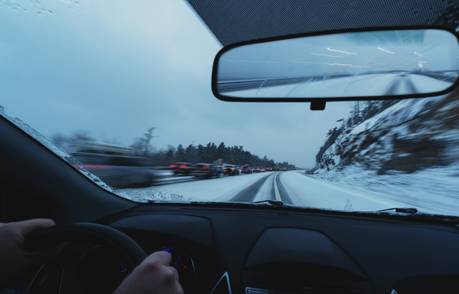
Winter Driving Essentials
Driving during the winter poses a whole host of challenges to motorists. With changing weather conditions and less light than during the summer, it takes more care to make steady progress during the winter while vehicles take more of a mechanical beating too.
So today we’re going to have a look through what you can do to ensure that you stay safe behind the wheel this winter.
Before you drive
De-icer
Available at most supermarkets, this item is an essential in making sure you do not have to spend 30 minutes waiting for your car to heat up. Save time in the morning by using a de-icer, paired with a scraper, to get on the road quicker on icy mornings.
Frost Guard
Not all cars have heated windscreens, and deicing your car could make you late for work. If you want to make sure your car is frost-free from the word 'go', cover your windscreen with a Frost Guard.
Winter Tyre Snow Grip Spray
This spray is basically a temporary liquid snow chain for your tyres, which allows you to drive with ease. It is especially handy for those whose area is not well gritted.
When driving
Sunglasses
The winter sun is usually a lot lower than the summer sun, and sunglasses will prevent you from being blinded. This is especially useful if you are smaller, as the sunshield will become somewhat useless against the low winter sun.
Warm blanket and non-perishable food
Always keep a blanket in the car in case of an emergency breakdown, as well as non-perishable foods such as cereal bars. This will keep you warm and satisfied against the winter chill.
In an emergency
Traction tracks
This foldable and handy item is very useful when stuck in snow, mud, grass (it is an all-season life-saver). This lets you get your car out of sticky situations when a shovel will not suffice.
Other important things for you to have when you are driving this winter include:
- Phone charger (in case you need to call emergency breakdown services)
- First aid kit
- Warm coat and sturdy footwear (if you need to stand outside in the case of a breakdown)
- Thick/disposable gloves (in the event of having to change a tyre)
- SatNav or map (for diversions)
- Torch (in case of nighttime breakdowns)
Having a Winter Emergency Kit is extremely organised, and preferable, in this weather. These kits usually include methods of getting your car out of the snow and keeping yourself warm and safe at the same time.
AA, Profile Atones and Am-Tech all offer their variation on these Winter Emergency Kits, so check these out if you want an all-in-one kit for the winter.
How Can I Drive Safely During Winter?
Conduct your checks beforehand
Even doing a few simple checks before you undertake a journey can make a big difference. You should make sure that you’ve got plenty of screenwash - you clean your screen more often during the winter - and that your windscreen wipers are operating correctly is a great place to start.
Make sure your tyres are properly inflated to the right pressures and check them over for any cuts or nicks which could lead to a blowout later on. Plus, if you notice that your car is struggling to start, then you may want to get your battery checked out by a professional. Once the temperatures fall, a struggling battery is more likely to fail entirely so being proactive in this area can avoid a delay further down the line.
Always remember your lights
A lot of the cars that you’ll find on HPL Motors come with automatic headlights which detect when the light is dropping and will activate by themselves. However, even if your car has automatic headlights fitted, it’s worth double-checking that they’re properly activated by looking at the icons on your dashboard.
Many automatic headlights struggle to detect light in heavy rain, which could leave you less visible to other road users. Always double-check that they’re switched on when you need them to be.
Increase your spacing
Roads tend to be greasier during the winter months, which is why increasing the distance between yourself and the car in front is essential. It gives you more time to respond and also allows more stopping distance. Your car’s ability to brake effectively is hampered in wet weather, so increasing your space can help offset this.
It’ll also help when travelling on the motorway as you’ll be able to make progress more smoothly and avoid having to touch the brakes unless absolutely necessary.
Be more cautious when the temperatures fall
Though the lead-up to winter has been remarkably mild, the temperatures are now starting to fall. That means, in certain areas, there'll be a higher chance of ice on the roads which can quickly cause an accident.
So if you notice that the temperatures have fallen to below freezing - or near to it - leave yourself extra time and take things steady. This even applies to areas that have been gritted as small patches of ice can still be missed.
Pack some supplies
Packing a small emergency supply kit can prove to be a real help in the event of an unexpected breakdown. So put together a small set of items that could help. A warm coat, blanket, gloves, torch and jump leads can all play a key role in keeping you both safe and warm. A fully charged phone power bank is a great addition too.
Plus, it’s a good idea to pack some snacks like crisps or chocolate - as well as a drink - to have if you’re stuck stationary.