/523/1/logo.png)
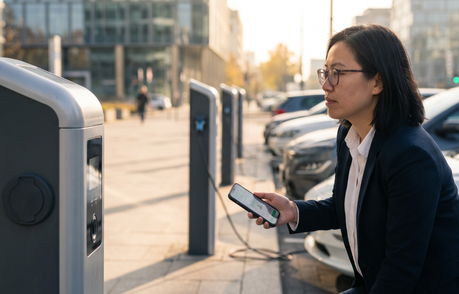
Electric Car Myths Busted: Range Anxiety, Charging & More
Introduction: Debunking Electric Car Myths
Electric vehicles are brilliant at generating headlines—and misconceptions. You've probably heard someone claim that EVs constantly leave drivers stranded, cost a fortune to charge, or can't handle British winters. These electric car myths persist despite rapidly evolving technology and a decade of real-world data proving otherwise.
The truth? Many beliefs about electric cars are rooted in early models from 2010-2015, when battery ranges barely exceeded 100 miles and charging infrastructure was genuinely patchy. Today's landscape looks radically different:
- Modern EVs routinely achieve 300+ miles, with premium options reaching 400+
- The UK's public charging network has grown to over 118,000 EV chargers as reported by ZapMap.
Yet myths die hard. A 2024 survey found that 60% of potential buyers still cite "range anxiety" as their primary concern—even when their daily commute averages just 23 miles. This disconnect between perception and reality is precisely what holds drivers back from making the switch.
We're cutting through the noise to examine seven stubborn misconceptions with actual evidence. No sales pitch, no greenwashing—just the practical realities of living with an electric car in 2026. Whether you're genuinely curious about making the transition or simply tired of hearing contradictory claims, let's separate automotive fact from fiction.
Interested in used Electric Cars? See our range of quality, used electric vehicles at showrooms local to you today.
Myth: You'll run out of charge all the time
Range anxiety is the concern that an EV will run out of charge before reaching its destination — but for most UK drivers, it's increasingly unfounded. The average UK driver covers roughly 20 miles daily, while even budget-friendly EVs offer 150+ miles on a single charge.
Range anxiety is the fear of an electric vehicle running out of charge before reaching a destination or charging point.
This is probably the most persistent of all EV myths. The reality? Modern electric vehicles rarely leave drivers stranded, and most journeys happen well within an EV's capabilities.
Consider this: the average UK driver covers roughly 20 miles daily, whilst even budget-friendly electric cars offer 150+ miles on a single charge. That's over a week's worth of commuting before you'd need to plug in. Many EVs now exceed 250 miles per charge, with premium models reaching 300-400 miles—comparable to many petrol cars.
The actual charging pattern differs from petrol refuelling. Rather than waiting until nearly empty, EV owners typically charge overnight at home, starting each day with a "full tank". It's a bit like keeping your phone topped up rather than running it to zero.
Range anxiety, whilst initially real, has diminished as battery technology improves and drivers adjust their mindset. The question shifts from "Will I make it?" to "Where's most convenient to charge?"—a far less stressful proposition altogether.
Myth: There aren't enough chargers
The infrastructure anxiety that fuels range anxiety stems from outdated perceptions. Yes, public charging networks lagged behind EV adoption initially—but the landscape has transformed dramatically.
Charging infrastructure is expanding rapidly, with the UK now boasting over 118,000 public charging points. Fast chargers along motorways mean you're rarely more than 25 miles from a rapid top-up during long journeys.
Here's what most statistics miss: over 80% of EV charging happens at home or work. For typical daily driving, you simply plug in overnight like you charge your phone. Public chargers become relevant mainly for road trips—and those networks continue growing month by month.
The real story? Charging infrastructure concerns are becoming less about availability and more about understanding where and how you'll actually charge. For most drivers with home charging capability, you'll use public chargers far less frequently than you currently visit petrol stations.
Myth: Charging takes too long to be practical
EV charging is not slower than petrol refuelling for most drivers — because 80% of charging happens overnight at home, requiring no active time at all. When public charging is needed, rapid chargers can add 100+ miles of range in 15–20 minutes.
One of the most stubborn charging myths is that topping up an EV takes forever compared to filling a petrol tank. But this comparison fundamentally misunderstands how electric vehicle ownership works in practice.
Home charging changes everything. Most EV drivers charge overnight at home whilst they sleep—something impossible with petrol cars. According to research on EV adoption patterns, approximately 80% of charging happens at home or work. Your car simply sits plugged in for 7-8 hours, much like your phone, and you wake to a full battery. No trips to the petrol station required.
When you do need public charging, the landscape has transformed dramatically. Rapid chargers now deliver 100+ miles of range in 15-20 minutes—roughly the time it takes to grab a coffee. Ultra-rapid chargers at motorway services can add 200 miles in half an hour.
The mental shift? Stop thinking "fill-ups" and start thinking "top-ups." You're rarely charging from empty to full. Instead, you're adding range during natural stops: whilst shopping, having lunch, or taking a motorway break. For typical daily driving patterns, modern EV ranges mean you're charging once or twice weekly at most.
The practicality question flips entirely when you consider never visiting a petrol station again.
Myth: EVs are worse for the environment than petrol cars
A persistent objection to electric vehicles centres on manufacturing emissions—particularly battery production. Critics point out that mining lithium, cobalt, and other materials creates a substantial carbon footprint before an EV even rolls off the factory floor. This is factually true. However, it's only half the story.
A lifecycle analysis measures the total environmental impact of a vehicle from manufacturing through to end-of-life, rather than tailpipe emissions alone.
The complete picture requires lifecycle analysis: manufacturing impact versus operational emissions over the vehicle's entire lifespan. Whilst an EV starts with a higher carbon debt than a comparable petrol car, it begins repaying that deficit from the first mile driven. Zero tailpipe emissions mean every journey chips away at the initial gap. In coal-heavy energy grids, this payback period might extend to three years; in renewable-rich grids, it can be as little as eighteen months.
The environmental equation becomes clearer when considering EV range improvements. Modern EVs achieving 250+ miles per charge aren't just alleviating range anxiety—they're maximising efficiency per kilogram of battery material. Better range means fewer battery replacements over the vehicle's lifetime, reducing the environmental cost per mile travelled.
Battery recycling—still an emerging field—promises to close the loop further, recapturing up to 95% of valuable materials for reuse in new cells.
Environmental Impact: Emissions and Sustainability
Beyond the charging and range battery myths, environmental credentials often spark heated debate. The claim that EVs merely shift emissions from tailpipe to power station oversimplifies the picture. Yes, electricity generation varies by region—a vehicle charged on coal-heavy grids carries a higher carbon footprint initially. However, grid composition is rapidly shifting towards renewables, meaning every EV on the road becomes cleaner over time without any modification.
Manufacturing does produce emissions, particularly during battery production. Yet lifecycle analyses consistently show EVs offset this within 18–24 months of typical driving compared to combustion engines. After that break-even point, the environmental advantage grows with every mile. Battery recycling programmes are also maturing rapidly—current processes recover up to 95% of lithium and cobalt, creating circular supply chains that further reduce environmental impact.
The often-overlooked factor is fuel extraction and refining. Petroleum production consumes enormous energy before a single drop reaches a forecourt. When you account for drilling, transport, and refining alongside grid emissions, the EV advantage becomes starker. Those worried about mining impacts should note that rare-earth metals aren't actually required in most modern EV motors—and ongoing chemistry improvements are steadily reducing cobalt dependency.
Myth: EV batteries don't last
EV batteries are designed to last significantly longer than smartphone batteries, typically carrying 8–10 year warranties covering 70–80% capacity retention. Real-world data suggests they frequently outlast these guarantees.
Battery degradation is the gradual reduction in a battery's ability to hold a full charge over time, typically measured as a percentage of original capacity.
Battery longevity worries many prospective buyers—often fuelled by comparisons to smartphones that lose capacity after two years. The reality paints a dramatically different picture.
Battery management systems actively prevent the deep discharge cycles that degrade smartphone batteries, whilst thermal regulation maintains optimal operating temperatures. Most manufacturers design cells to handle 1,000–2,000 full charge cycles before significant degradation occurs—translating to hundreds of thousands of miles for average drivers.
Importantly, battery degradation rarely renders vehicles unusable. A battery retaining 80% capacity still provides substantial range for daily commuting. When batteries do reach end-of-life for automotive use, they find second lives in stationary energy storage, further offsetting overall EV emissions across their lifecycle.
The data speaks clearly: replacement needs remain rare, with studies showing less than 2% of batteries requiring replacement outside warranty periods. Comparing this to combustion engines—which face inevitable wear on thousands of moving parts—the simplicity of electric drivetrains often proves more durable. Battery longevity concerns, whilst understandable, don't reflect the engineering advances that now characterise modern electric vehicles.
Conventional Wisdom vs Reality: Common Misconceptions
Several persistent myths about electric vehicles contradict what's happening on the ground. The gap between perception and reality often stems from outdated information or misunderstandings about how the technology has evolved.
The "EVs are just as polluting" fallacy tops the list. Whilst battery manufacturing does create emissions—primarily from energy-intensive processes and raw material extraction—lifecycle analyses consistently show EVs produce significantly fewer emissions than petrol cars when factoring in production and operational use. As electricity grids incorporate more renewables, this advantage grows larger annually.
Another widespread misconception claims EVs don't suit British weather. Cold temperatures do reduce range—typically by 10–20%—but modern thermal management systems mitigate this effect considerably. Manufacturers design battery packs specifically for diverse climates, and pre-conditioning whilst plugged in eliminates the need to drain battery power for cabin heating.
The notion that EVs are simply "compliance cars" no longer holds water. Major manufacturers are pivoting their entire product lines towards electrification—not from regulatory pressure alone, but because consumers increasingly demand them. What seemed like conventional wisdom just five years ago now resembles outdated thinking, particularly as charging infrastructure expands, and real-world ownership experiences prove far more positive than anticipated.
Example Scenarios: Adapting to EV Ownership
Transitioning to electric vehicle ownership follows surprisingly predictable patterns across different lifestyles. Understanding how similar drivers adapted successfully helps demystify the process.
The Suburban Commuter typically starts with the most straightforward transition. With a 30-mile daily round-trip commute and home charging, the vehicle rarely ventures below 60% charge. Weekend trips to visit family 90 miles away remain perfectly manageable on a single charge. What typically happens is that after three months, anxiety about range disappears entirely—replaced by annoyance at having to visit petrol stations for the remaining conventional car in the household.
The Urban Dweller without home charging initially seemed an unlikely EV candidate. However, by locating two reliable rapid chargers near the weekly supermarket and gym, charging becomes integrated into existing routines. A 30-minute top-up during the grocery shop every fortnight provides adequate range for city driving and occasional countryside excursions.
The Fleet Driver covering 200 miles daily required more planning but discovered that a lunch break rapid charge and scheduled rest stops aligned perfectly with duty regulations. The predictable routine actually simplified logistics compared to hunting for competitive fuel prices.
Each scenario demonstrates how electric vehicles adapt to existing patterns rather than requiring complete lifestyle overhauls.
Limitations and Considerations
Whilst electric vehicles have made tremendous strides, certain practical limitations still deserve honest acknowledgement. Cold weather remains a genuine challenge, reducing range by 20-40% in freezing temperatures as batteries work harder to maintain performance and cabin heating draws significant power. This isn't a dealbreaker, especially in the milder UK weather, but it does require awareness during winter journey planning.
Charging infrastructure, though expanding rapidly, still creates genuine gaps in rural and remote areas. Long-distance travel occasionally demands strategic planning that petrol drivers rarely consider. The phrase "charge anxiety has replaced range anxiety" reflects a shift in concerns rather than their elimination.
Upfront purchase costs remain higher than equivalent combustion vehicles, despite lower running expenses. The break-even point varies considerably based on annual mileage and charging patterns. Battery degradation, whilst slower than many assume, does occur—typically 2-3% capacity loss in the first year, then roughly 1% annually thereafter.
Those living in apartments without dedicated parking face legitimate obstacles. Relying solely on public charging adds inconvenience and potential expense that undermines some of the EV ownership benefits that home charging provides.
Frequently Asked Questions About Electric Cars
Q: How far can an electric car travel on a single charge?
A: Most modern EVs achieve 200–300 miles per charge. Budget models typically offer 150+ miles, while premium models can reach 300–400 miles — comparable to many petrol cars.
Q: How long does it take to charge an electric car?
A: Home charging overnight takes 7–8 hours for a full charge. Rapid public chargers add 100+ miles in 15–20 minutes. Ultra-rapid motorway chargers can add 200 miles in around 30 minutes.
Q: Are electric cars worse for the environment than petrol cars?
A: No. Whilst EV battery manufacturing produces higher upfront emissions, lifecycle analyses show EVs offset this carbon debt within 18–24 months of typical driving. The environmental advantage grows with every mile thereafter.
Q: How long do EV batteries last?
A: EV batteries typically carry 8–10 year manufacturer warranties covering 70–80% capacity retention. Studies show fewer than 2% of batteries require replacement outside warranty periods.
Q: Is UK charging infrastructure good enough?
A: The UK now has over 65,000 public charging connectors, with rapid chargers along motorways meaning drivers are rarely more than 25 miles from a fast top-up. For most daily driving, home or workplace charging removes reliance on public networks entirely.
Key Takeaways
- Modern EVs achieve 200–300 miles per charge, making range anxiety an outdated concern for most UK driving patterns
- Over 80% of EV charging happens at home or at work — most drivers rarely rely on public chargers
- EV batteries carry 8–10 year warranties, with fewer than 2% requiring replacement outside this period
- Lifecycle analyses show EVs offset battery manufacturing emissions within 18–24 months of driving
- The UK has over 118,000 public charging connectors, more than enough for long-distance travel
The transition from myth to reality in electric vehicle ownership represents a significant shift in how we approach personal transport. Range anxiety, once a legitimate barrier, has evolved into range confidence as charging infrastructure expands and battery technology improves. Modern EVs routinely exceed 200 miles on a single charge, with home charging eliminating most daily range concerns.
The evidence tells a compelling story: range anxiety is increasingly becoming an outdated myth rather than a practical barrier. Charging times continue to decrease, public infrastructure grows exponentially, and total cost of ownership often favours electric vehicles despite higher initial prices. Weather does impact performance, but rarely in ways that prevent practical daily use.
For prospective buyers, the message is clear: evaluate electric vehicles based on your actual driving patterns rather than hypothetical worst-case scenarios. Start with overnight home charging in mind, research the specific charging network coverage in your area, and test drive to experience the reality beyond the myths. The technology has matured beyond the common misconceptions – the question now isn't whether EVs work, but which one fits your lifestyle best.
Ready to See What's Available?
The best way to move past the myths is to see the reality in person. HPL Motors stocks a range of electric vehicles across our North West dealerships — from practical everyday EVs to longer-range models suited to motorway driving.
Browse our current electric car stock to find a vehicle that matches your driving patterns and budget. Each listing includes real-world range figures, charging specs, and full vehicle details, so you can make a straightforward comparison before you visit.