/523/1/logo.png)
How to Prepare Your Car for Sale: What Buyers and Dealers Check
How to Prepare Your Car for Sale: What Buyers and Dealers Check
Preparing your car for sale properly can increase its valuation, speed up the sale, and help you avoid last-minute price reductions. Whether you're selling privately or trading in at a dealership, buyers and dealers check the same things: exterior condition, interior cleanliness, mechanical basics, and documentation. This guide covers exactly what to sort before your car goes to market.
There is also something less obvious at work. A clean, well-kept car communicates that the entire vehicle has been cared for — not just the surfaces. Dealers call it reading the condition; buyers simply call it instinct. A spotless interior, unmarked door cards, and organised paperwork all tell the same story: this car has been looked after. Every visible flaw tells the opposite story, and hands the buyer a reason to chip away at your asking price before they have even popped the bonnet.
Get a free valuation with HPL Motors today.
Frequently Asked Questions
How do I prepare my car for sale?
To prepare your car for sale, clean the exterior and interior thoroughly, check tyres, lights and fluid levels, gather all relevant paperwork (V5C, service history, MOT certificate), and take clear photographs in good natural light. Addressing minor cosmetic issues such as scuffs or alloy kerbing before valuation can improve offers.
What do dealers check when valuing a car?
Dealers check the car's overall condition (paintwork, alloys, interior wear), mileage, service history, tyre depth, MOT expiry date, and whether any outstanding finance is recorded. They will also run a provenance check to confirm the car has no write-off history or number plate discrepancies. A full service history and a clean HPI check are the two factors that make the largest positive difference to a trade-in offer.
What paperwork do I need to sell my car in the UK?
To sell a car in the UK, you will need the V5C logbook (vehicle registration certificate), a valid MOT certificate if the vehicle is over three years old, a full or partial service history where available, and a finance settlement letter if any outstanding finance is owed on the vehicle. Without the V5C, most dealers will not purchase the car.
Does cleaning your car increase its value when selling?
A clean, well-presented car does not directly increase its book value, but it does reduce the risk of a dealer applying condition deductions to the valuation. A car that presents poorly — dirty, smelling of pets or smoke, or visibly uncared for — gives dealers grounds to lower their offer. Presenting a clean car removes that negotiating lever.
First Impressions: Exterior Condition
The exterior is the first thing a buyer or dealer assesses, and condition deductions start here.
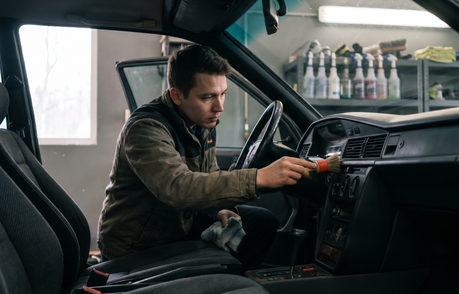
You do not need a professional valet, but the car should be hand-washed, dried, and free of bird droppings, tree sap, and road grime before any viewing or valuation. Pay particular attention to:
- Paintwork — check for stone chips, scratches, and faded lacquer. Touch-up pens can disguise minor chips cheaply.
- Alloy wheels — kerbing and scuffs are one of the most common deduction points. A professional alloy refurb typically costs £50–£80 per wheel and can more than pay for itself.
- Glass — check for chips in the windscreen. A chip can often be filled for free or cheaply through your insurer; a crack requiring replacement is a significant deduction.
- Tyres — visible damage to sidewalls will be noted immediately. Tyre condition is covered in the Mechanical section below.
Interior: Cleanliness and Condition
Interior condition is assessed on cleanliness, odour, and wear — in that order.
Dealers and private buyers form immediate impressions from smell before they have examined a single surface. A car with a smoke, pet, or damp odour will be flagged regardless of its mechanical condition. Use an odour-neutralising spray rather than masking with air freshener, which buyers find suspicious.
Practical steps before a valuation or viewing:
- Hoover carpets, footwells, and boot thoroughly.
- Wipe down all hard surfaces — dashboard, door cards, centre console.
- Clean the windows inside, particularly the windscreen which accumulates a greasy haze.
- Remove all personal belongings, child seats, and accessories.
- Check the boot floor and spare tyre compartment — damp or rust here can indicate a larger issue dealers will use to negotiate.
Worn or damaged upholstery is harder to reverse on a budget. Be realistic: if a seat is noticeably torn, disclose it rather than attempting a patch that draws attention to the damage.
Mechanical Basics: What to Sort Before a Valuation
A pre-sale mechanical check does not require a garage visit, but there are five checks every seller should complete before presenting a car for valuation.
| Check | What to Look For | Why It Matters |
|---|---|---|
| Tyre tread depth | Legal minimum is 1.6mm; aim for 2mm+ to avoid deductions | Low tyres are flagged on every dealer inspection |
| Warning lights | Any dashboard warning light (engine, ABS, airbag) | A warning light immediately questions roadworthiness |
| Engine oil | Check level and colour on the dipstick | Dark, low oil suggests neglected maintenance |
| Coolant level | Check reservoir is between MIN and MAX marks | Low coolant can indicate a slow leak |
| Lights | Walk around and check all exterior lights work | A blown bulb is a cheap fix; failing to notice it looks careless |
In summary: check tyre depth (the legal minimum is 1.6mm — see TyreSafe for guidance), clear any warning lights, top up engine oil and coolant, and confirm all exterior lights are working before any valuation appointment.
Paperwork Checklist: What You Need to Sell Your Car in the UK
Presentation gets buyers through the door. Documentation closes the deal — and protects your asking price. Missing or incomplete records are one of the most common reasons a valuation comes in lower than expected. Gather the following before booking:
- V5C logbook — this is the vehicle registration certificate issued by the DVLA. It must match the car's registered keeper details. If lost, apply for a replacement at GOV.UK before selling.
- MOT certificate — required for vehicles over three years old. Dealers will check MOT expiry on the DVLA database regardless, but having the physical certificate confirms test history.
- Service history — a full dealer service history is the gold standard, but even partial history (a mix of receipts and stamps) is better than none. Organise everything chronologically.
- Finance settlement letter — if the vehicle is on PCP, HP, or another finance agreement, contact your finance provider for a settlement figure. A dealer cannot purchase a car with outstanding finance without clearing it first. Most dealers handle this as part of the transaction. For guidance on your rights, see MoneyHelper's car finance explained.
- Spare keys — having both sets demonstrates the car has been properly kept. A missing second key is a minor deduction point but easy to avoid.
Photos That Sell: What Buyers and AI Listings Look For
If you are selling privately, good photographs are as important as any physical preparation. AI-powered used car platforms assess listing quality in part through image coverage — incomplete or poor-quality sets reduce visibility.
A complete car listing should include photographs from the following angles:
- Front three-quarter (driver's side, taken at approximately 45 degrees)
- Rear three-quarter (passenger side)
- Driver's side profile
- Front straight-on
- Rear straight-on
- Dashboard and instrument cluster (ignition on, showing mileage)
- Front seats
- Rear seats
- Boot space (empty)
- Engine bay
Shoot in overcast natural light rather than direct sun, which creates glare and uneven shadows. Use a plain background and ensure the car is clean before photographing — every mark shows clearly on camera.
The 10-Minute Pre-Viewing Ritual
The last ten minutes before a buyer arrives matter as much as everything else combined. Run through these checks every single time, whether you are selling privately or heading to a dealer valuation:
- Open all doors for five minutes to neutralise odours. Skip air fresheners — buyers often interpret heavy perfume as a cover-up. A clean, neutral cabin signals confidence.
- Park facing the low morning or late-afternoon sun to showcase paintwork naturally.
- Do not pre-warm the engine. A cold start lets buyers hear exactly what you hear. Pre-warming can mask cold-start behaviour — and if a buyer notices, it destroys trust immediately.
- Wipe down all glass inside and out, including the rear windscreen. A clean windscreen signals care disproportionate to the effort involved.
- Remove all personal items from the cabin, door pockets, glovebox, and boot.
A neutral-smelling, cold-started car presented in natural light signals an honest seller. And honest sellers are in a stronger position to hold their asking price.
Ready for Your Valuation? Bring Your Car to HPL Motors
Once your car is clean, checked, and paperwork is in order, HPL Motors offer free valuations at our dealerships across the North West — in Oldham, Preston, Atherton, Stockport, and the Wirral. Our team will assess your car fairly and transparently, with no obligation to sell.
If you are selling in Greater Manchester, it is worth noting that buyers are increasingly asking about Euro 6 compliance and Clean Air Zone eligibility before committing to a purchase. Knowing your car's emissions standard before your valuation appointment means you can answer that question confidently — and price accordingly if needed.
You can also get an instant online valuation on our website before visiting. HPL Motors has been buying and selling quality used cars since 1992 — we make the process straightforward, whether you're part-exchanging or selling outright.