/523/1/logo.png)
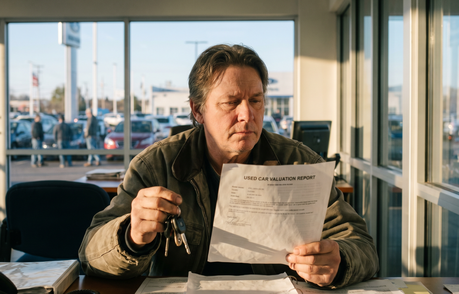
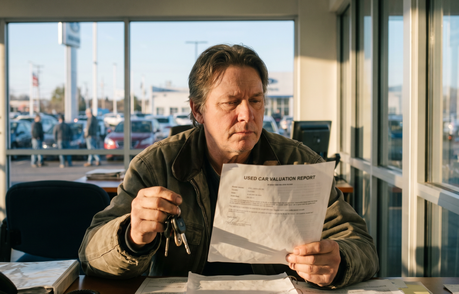
The Convenience Gap: Why Part-Exchange Beats Private Sales for North West Drivers
Part-Exchange vs Private Sale: Which Gets You More Money for Your Car
When it comes to selling your car in the UK, the debate between part-exchange and private sale almost always starts with the same observation: private listings look more profitable. A quick search on AutoTrader confirms it — your car listed privately might command £1,000–£2,000 more than a dealer's trade-in offer.
But gross listing price and net return are two very different numbers. Once preparation costs, platform fees, time investment, and negotiating losses are factored in, that gap shrinks considerably — and in many cases, part-exchange delivers the stronger real-world result.
This guide breaks down exactly how both routes work, what realistic figures look like for UK sellers, and which option makes the most financial sense depending on your situation.
How Part-Exchange Works — And What Dealers Look For
Part-exchange means using your current car as part-payment toward your next vehicle at a dealership. The dealer values your car, deducts that amount from the purchase price, and you pay any remaining balance through cash, finance, or a combination of both.
Dealers assess part-exchange vehicles on several key factors:
- Age and mileage — benchmarked against live market data from AutoTrader and Cap HPI
- Service history — a full, stamped history adds tangible resale value
- Condition — paintwork, interior, tyres, and mechanical state
- Market demand — how quickly your specific model is likely to sell from their forecourt
A dealer's offer will always sit below private market value. That gap reflects the cost of reconditioning, warranty provision, and forecourt overheads — not simply profit margin. The National Franchised Dealers Association (NFDA) confirms that used vehicle departments operate on tight net margins once operational costs are accounted for.
💡 HPL Motors offer free, no-obligation part-exchange valuations across their sites in Manchester, Preston, Oldham, Atherton, Stockport, and the Wirral. Get your valuation →
How Private Sales Work — Platforms, Pricing, and Effort
Selling privately means listing your car directly to individual buyers, cutting out the dealer entirely. The main platforms UK sellers use are:
- AutoTrader — the UK's largest used car marketplace. Standard listings are free for private sellers, with paid upgrades available for greater visibility (autotrader.co.uk)
- Facebook Marketplace — free to list with broad local reach, though buyer quality varies significantly
- eBay Motors — auction and buy-it-now formats, with insertion fees depending on listing type
Which? recommends researching comparable listings carefully before setting your asking price — overpriced cars generate fewer enquiries, and when interest does arrive, buyers use every detail to negotiate aggressively.
AutoTraders free valuation tool is a reliable starting point, giving a realistic private sale price range based on your car's age, mileage, specification, and postcode.
The Real Price Comparison: What UK Sellers Actually Pocket
This is where the headline gap between private sale and part-exchange starts to close. Take a realistic example: a 2021 Volkswagen Golf with 28,000 miles in good condition.
| Route | Figure |
|---|---|
| Estimated private sale price | £14,500 |
| Typical part-exchange offer | £12,800 |
| Headline gap | £1,700 |
Now factor in the realistic costs of selling privately:
| Cost | Estimate |
|---|---|
| Professional valet | £100–£200 |
| Minor cosmetic repairs (stone chips, trim) | £50–£150 |
| AutoTrader listing (standard) | £0–£30 |
| Buyer negotiation (typical reduction) | £300–£700 |
| Adjusted net private sale return | £13,420–£14,050 |
The real-world gap narrows to somewhere between £750 and £1,250 — before accounting for your time. For many sellers, that margin simply doesn't justify the effort and risk involved.
The Hidden Costs of Selling Privately
Getting 'Retail Ready' Costs More Than You Think
Private buyers expect near-showroom presentation. Minor cosmetic issues that a dealer simply factors into their offer become direct negotiating leverage in a private sale. Expect to spend £150–£350 on preparation before a single viewing takes place.
MOT Advisories: Silent Price Killers
An MOT advisory is technically a non-failure item, but informed buyers research every single one. A note about slightly worn rear brake pads or a corroded exhaust bracket can prompt demands of £300–£500 off your asking price — often well beyond the actual repair cost. This leverage effect consistently erodes private sale margins.
The Time Tax Nobody Budgets For
Crafting a listing, fielding lowball messages, managing no-shows, and giving up weekends to viewings that go nowhere is a significant time investment. A common pattern for private sellers is spending three to six weekends on what becomes, in effect, a part-time job.
Scam Risk
Which? and Citizens Advice both flag that private car sales carry real fraud risks — from fake bank transfer confirmations to test-drive scams. A dealership transaction eliminates these risks entirely, with payment handled through regulated processes in a professional environment.
When Part-Exchange Is the Better Deal
Speed and Simplicity
A part-exchange is typically completed in a single dealership visit. No viewings, no negotiations with strangers in your driveway, no chasing payment. The entire process — valuation, paperwork, and handover — happens in one appointment.
VED (Road Tax)
When you sell privately, your road tax is automatically cancelled and the DVLA issues a refund for any unused full months — but the buyer must purchase their own VED separately. GOV.UK guidance on notifying the DVLA covers this process in full. With part-exchange, the dealer handles this admin as part of the transaction, removing one more step from your plate.
Outstanding Finance
If your car is on HP or PCP, part-exchange is almost always the cleaner route. Legally, a financed car is owned by the finance company — not you — and selling it privately without settling the agreement first carries serious legal risk. A dealer can obtain your official settlement figure directly from the lender and handle it within the same transaction. MoneyHelper has clear guidance on settlement figures and negative equity options for drivers in this position.
The VAT Saving on New Cars
For drivers purchasing a new or VAT-qualifying vehicle, part-exchange can deliver a genuine tax saving. The part-exchange value is deducted from the purchase price before VAT is applied, reducing the total tax paid on the new vehicle — a saving that private sale simply cannot replicate.
Can You Negotiate a Better Part-Exchange Price?
Yes — and more sellers should. The dealer's first offer is rarely their best. A few approaches that work in practice:
- Get valuations from multiple dealers before committing — competitive offers give you a genuine benchmark and direct negotiating leverage
- Use valuation tools to show comparable private listings at the point of negotiation — dealers are aware of market pricing and will respond to evidence
- Separate the negotiations — discuss your part-exchange value and the price of the new car independently, rather than letting them be bundled into a single monthly payment figure
Frequently Asked Questions
Is it better to part-exchange or sell my car privately in the UK?
It depends on your priorities. Private sale can achieve a higher headline figure, but part-exchange typically delivers a stronger net return once preparation costs, negotiation, and time are factored in. For drivers with outstanding finance, or anyone who values certainty and speed, part-exchange is usually the better route.
How much more do I get for selling privately vs part-exchange?
The headline gap is typically 10–15% in favour of private sale. In real-world terms — after preparation, listing fees, and buyer negotiation — that often narrows to a few hundred pounds. AutoTrader's free valuation tool gives a reliable starting benchmark for both private and trade-in estimates.
What are the risks of selling a car privately in the UK?
The main risks are fraudulent payment, no-show buyers, aggressive price negotiation after viewing, and the legal complexity if the car has outstanding finance. Citizens Advice provides practical guidance on protecting yourself in private transactions, including safe payment methods.
Can I negotiate a better part-exchange price at a dealer?
Yes. Researching your car's current private market value before visiting gives you a solid negotiating baseline. Getting valuations from more than one dealer is the most effective tactic for securing a competitive offer.
Ready to Find Out What Your Car Is Really Worth?
Before listing anywhere — or accepting the first offer — get a professional part-exchange valuation as your starting point. Knowing your car's true market value puts you in a stronger position, whichever route you ultimately take.
HPL Motors provides free, no-obligation part-exchange valuations across sites in Manchester, Preston, Oldham, Atherton, Stockport, and the Wirral. Their team will give you a fair, transparent offer based on current market data — with no pressure to proceed.
➡ Get your free part-exchange valuation at HPL Motors today.
Whether you're upgrading, downsizing, or simply ready for a change — knowing your number is always the smartest first move.