/523/1/logo.png)
Volvo EX30 Review 2026
- 1
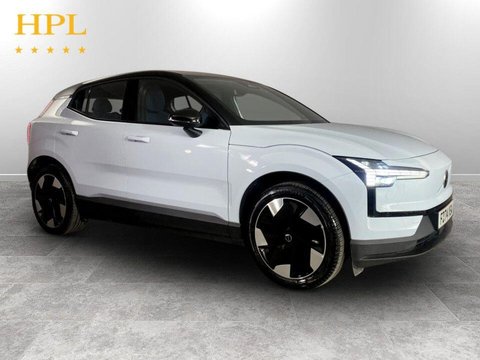
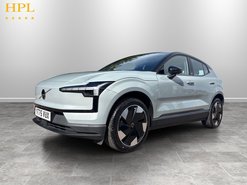
- Typical used price (UK): £20,000–£33,000 (varies widely by battery, motor and trim)
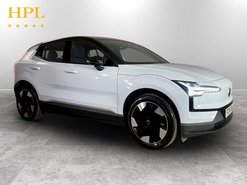
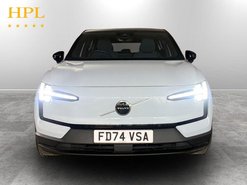
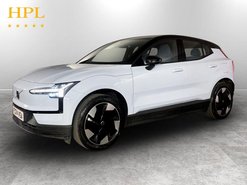
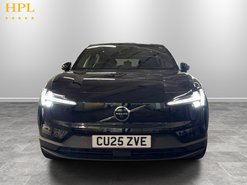
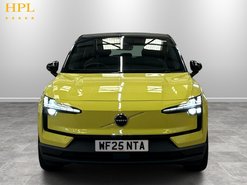
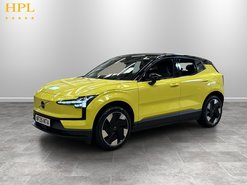
- This car: £25,499 (FD74VSA, HPL Motors Oldham)
- Insurance group: 40P
- Range (WLTP): Up to 280 miles (this Twin Motor Performance); ~64kWh usable battery
- CO₂: 0 g/km
- Best for: Design-led city and commuter driving; buyers wanting performance and premium feel without a premium price
Is It a Good Choice?
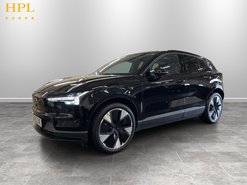
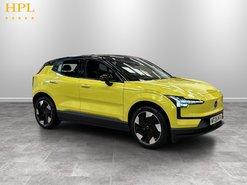
For a lot of buyers, yes. The Volvo EX30 takes the things people like about Volvo — clean design, a calm cabin and a serious safety reputation — and shrinks them into an affordable electric SUV that makes sense for everyday UK driving. It looks smart, it's easy to place on narrow roads, and it costs very little to run.
This particular car adds a twist. It's the Twin Motor Performance, the quickest version in the range, so it's not the one most EX30 buyers choose. But at £25,499 with one owner and 6,405 miles, it's a striking amount of performance and kit for the money, especially given it cost well over £40,000 new. If you want the EX30's style with a genuine turn of pace, this is a lot of car for a sensible outlay.
Pricing & Running Costs
The EX30 only launched in 2024, so the used market is young and early depreciation has been steep — good news if you're buying. Prices depend on which battery and motor you choose.
Typical UK Used Price Ranges:
- Single Motor (smaller battery): roughly £20,000–£24,000
- Single Motor Extended Range: roughly £23,000–£29,000
- Twin Motor Performance: roughly £25,000–£33,000, depending on trim and mileage
- This car (Twin Motor Performance, 6,405 miles): £25,499
Running Costs
- Insurance group 40P — high, so budget for it; single-motor EX30s sit in lower groups
- On a cheap overnight tariff, energy costs a fraction of a petrol equivalent to run
- Fewer moving parts and no oil changes mean light routine servicing
- The Twin Motor's power and weight can wear tyres faster, so factor that in
- EVs now pay VED road tax (see Range, Charging & Tax below)
Performance & Driving Experience
Most EX30s are single-motor and rear-wheel drive, and brisk enough. This one is on another level. The Twin Motor Performance adds a front motor for all-wheel drive and around 422bhp — supercar-baiting output in a car this small. In everyday use that means instant, quiet, effortless pace.
The trade-off is that few buyers actually need this much power, and chasing it costs you range. Away from the acceleration, the EX30 is easy and relaxing to drive: light steering, good visibility and a hushed cabin. The ride leans firm, partly because it's a short, small car, so rough surfaces do make themselves known. Reviewers also note the driver-assistance beeps and lane-keeping can feel over-eager, though much of that can be dialled back in the settings.
Key Performance Figures:
- Power: 422 bhp (428 ps) — 272 ps rear motor plus a 156 ps front motor
- Torque: 543 Nm
- Battery: 69 kWh (around 64 kWh usable)
- Gearbox: Single-speed automatic
- Drive: All-wheel drive (dual motor)
- 0–62 mph: 3.4 seconds (as listed for this car; Volvo's official figure is 3.6 seconds)
Interior & Technology
Inside is where the EX30 justifies the Volvo badge. The cabin is minimalist and genuinely well finished, built around a single 12.3-inch portrait touchscreen that handles nearly everything. It runs Google built-in, so Maps, Assistant and the Play Store feel familiar and, when the software behaves, quick to use. This car is well equipped too, with a Harman Kardon sound system, wireless Apple CarPlay, wireless phone charging, heated front seats and steering wheel, a heat pump, two-zone climate with an air purifier and a powered tailgate.
The flip side of putting everything on one screen is that there's no instrument display in front of the driver — speed and key information sit on the central screen, which takes acclimatising to. And because so much runs through software, the occasional glitch is more noticeable than it would be in a conventional car. Material quality and design, though, are a clear step above most small EVs.
Space & Practicality
The EX30 is compact, and it feels it. Front-seat space is good and the driving position is comfortable, but rear legroom is tight for taller adults, and the boot is modest for the class. There's clever storage up front — a sliding centre console and useful cubbies — plus a small load area under the bonnet for charging cables. It's best thought of as a stylish car for one or two people, or a small family, rather than a load-lugger.
Dimensions:
- Length: 4,233 mm
- Width: 1,940 mm
- Height: 1,555 mm
- Boot: around 318 litres
- Seats: 5
- Doors: 5
Range, Charging & Tax
Being electric, the EX30 is exempt from tailpipe emissions and cheap to fuel, but the Twin Motor Performance is the least efficient version, so range is where it asks for compromise.
- Official range (WLTP): up to 280 miles for this Twin Motor Performance
- Real-world range: expect roughly 210–230 miles in mixed use, dropping toward 160 miles on a fast motorway run or in cold weather. The Single Motor Extended Range goes noticeably further if range matters most to you
- Home charging: an 11kW on-board charger (fitted to this car) gives a full charge in around 11–12 hours on a suitable home or workplace supply — ideal for overnight top-ups
- Rapid charging: up to 153kW on a DC rapid charger, for roughly a 10–80% top-up in around 28 minutes
- CO₂ and tax: 0 g/km at the tailpipe. Since April 2025, electric cars are no longer exempt from road tax (VED); the EX30 now pays a low first-year rate and then the standard annual rate. Because it was a pricey car when new, it may also fall under the higher-value car supplement — check the current DVLA rates for this registration
- Clean Air Zones: as a pure EV, it's exempt from ULEZ and Clean Air Zone charges
Safety & Reliability
Safety is the EX30's strongest suit. It scored the maximum five stars in Euro NCAP testing in 2024, and that rating covers the all-wheel-drive versions like this one. It comes loaded with active safety kit as standard, including autonomous emergency braking, lane-keeping assist, driver-attention monitoring and front and rear parking sensors with a reversing camera.
NCAP Ratings (Euro NCAP, 2024):
- Overall: 5 Stars
- Adult occupant: 88%
- Child occupant: 85%
- Vulnerable road users: 79%
- Safety assist: 80%
On reliability, the EX30's foundations are reassuringly solid: the battery, motors and structure have proven dependable, and owner satisfaction sits around the 90% mark. Like most software-led cars, some early examples had minor infotainment niggles, but Volvo has smoothed these out with over-the-air updates. As with any recent EV, it's worth checking outstanding updates or recall work have been done — routine due diligence a good retailer will already have handled.
That's where buying from an established retailer pays off: this car has just 6,405 miles with one owner and full service history, and HPL guarantees its battery health above 90% — real reassurance on a used EV. Every car also gets a 128-point check and a warranty, so you're covered from day one.
Alternatives
- Kia Niro EV — Less exciting to look at, but roomier, practical and with stronger real-world range.
- Hyundai Kona Electric — Efficient, well-proven and easy to live with as a first EV.
- Peugeot e-2008 — A stylish small electric SUV with a smart interior and a similar footprint.
- Jeep Avenger — Characterful, good value and easy around town.
- Mini Countryman Electric — Another premium-feeling small EV, with a bit more rear space.
- Vauxhall Mokka Electric — Bold looks and keen used pricing make it a sensible value rival.
Verdict
The Volvo EX30 is one of the most appealing small electric SUVs on the used market: it looks fantastic, feels genuinely premium inside, is superbly safe and costs little to run. This Twin Motor Performance example turns it into something a bit special, adding real pace for a price that looks very keen against what it cost new.
You do have to accept the compromises: a firm ride, tight rear space, modest real-world range for the performance version, a high insurance group, and software that still has the odd off day. Confirm the recall and software status, and you're getting a stylish, quick and safe EV that punches well above its price.
Overall Rating: ⭐ 4.4 / 5
Volvo EX30 FAQs
- Is the Volvo EX30 a good first electric car?For town and commuting, it's an excellent choice: compact, easy to park, cheap to run and very safe. Just note this particular car is the powerful Twin Motor version, so it sits in a high insurance group. A single-motor EX30 is the more sensible pick for a first EV.
- How far will the EX30 go on a charge?This Twin Motor Performance is rated at up to 280 miles (WLTP), with a realistic 210–230 miles in mixed driving, less on a fast motorway run or in winter. The Single Motor Extended Range travels further if maximum range is your priority.
- Is the Volvo EX30 ULEZ compliant?Yes. As a fully electric car it produces no tailpipe emissions, so it's exempt from the ULEZ and other Clean Air Zone charges.
- Does it have Apple CarPlay?Yes. This car has wireless Apple CarPlay, alongside Volvo's Google built-in system, a Harman Kardon sound system and wireless phone charging.
- Do electric cars still pay road tax?hey do now. Since April 2025, EVs are no longer exempt from VED, so the EX30 pays a low first-year rate and then the standard annual rate. Because it was expensive when new, it may also attract the higher-value car supplement — check the current DVLA rate for this car.
- Is £25,499 a fair price for this EX30?It's competitive. Twin Motor Performance EX30s typically sit between roughly £25,000 and £33,000 used, and this one is at the lower end with low mileage, one owner and a guaranteed battery health above 90%, which is reassuring on an early EV.
Our verdict
What's good
- Premium, beautifully designed cabin that shames most rivals
- Five-star Euro NCAP safety with a generous suite of standard kit
- Genuinely rapid in this Twin Motor Performance form
- Very cheap to run, and exempt from ULEZ and Clean Air charges
- Strong value used against a high original list price
What's not so good
- Software can be glitchy, especially on earlier cars
- Tight rear seats and a modest boot
- Firm ride and a high insurance group in this performance spec
- Real-world range is only average for the Twin Motor version